Edward Stewart, Creative mind and Producer
I build modern web applications with clean code and great user experiences. And design all kind of stuff.
Featured Dev Projects
A selection of development projects showcasing my full-stack skills
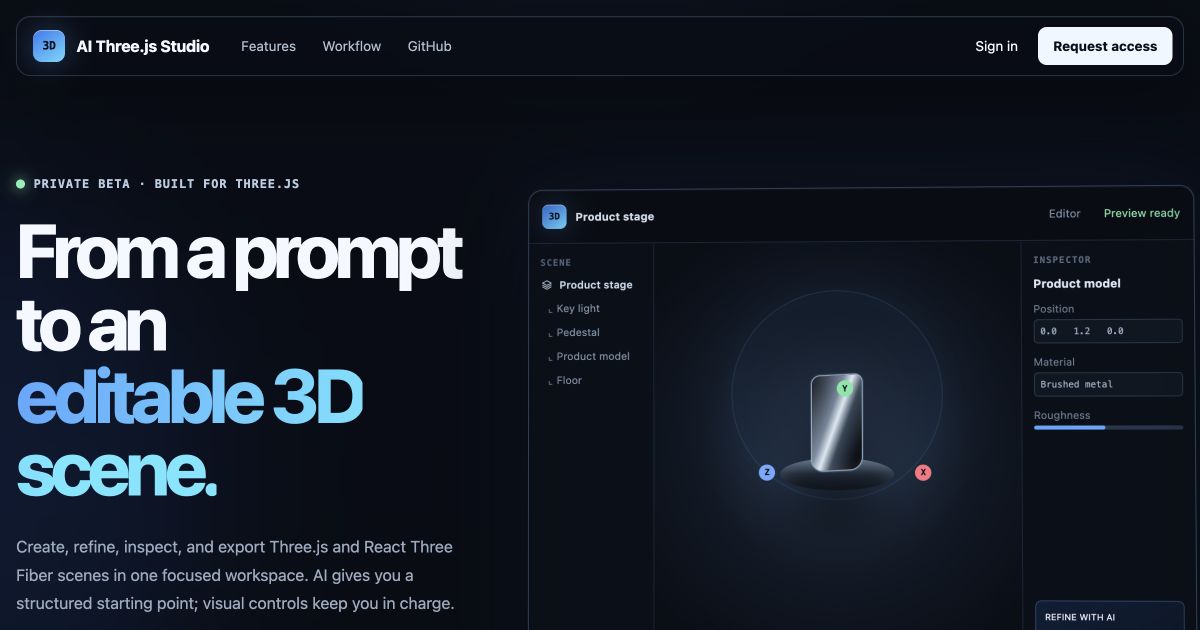
AI Three.js Studio
AI-assisted workspace that turns a prompt into a structured, editable Three.js or React Three Fiber scene. What it does Generates and revises validated 3D scene data with OpenAI, Anthropic, or Gemini Combines a visual scene hierarchy, property inspector, prompt workflow, and live preview Handles GLB/glTF models, textures, HDRIs, and project-level assets Produces sandboxed share previews and exportable source Architecture I built the React/Vite editor, Fastify API, shared TypeScript scene schema, multi-provider AI workflow, and hosted deployment. The beta uses Vercel for the web client, Railway for the authenticated API and isolated preview worker, and Supabase for authentication, Postgres, and storage. The hosted version is invite-only while the MIT-licensed source is public on GitHub.
Claude / Codex ↔ Blender Integration (MCP-based)
MCP-based integration, where LLM models (Claude, Codex, OpenAI) control Blender through Blender's Python API. The project enables agent-based workflows that combine natural language control, context management, code generation, Blender runs, and result validation. Designed to explore how AI can be integrated into creative and technical 3D work in a controlled, safe, and repeatable manner. Focus areas: Agent workflows & tool orchestration Blender Python API automation Guardrails & rollback safety Prompt → 3D / GLB pipeline
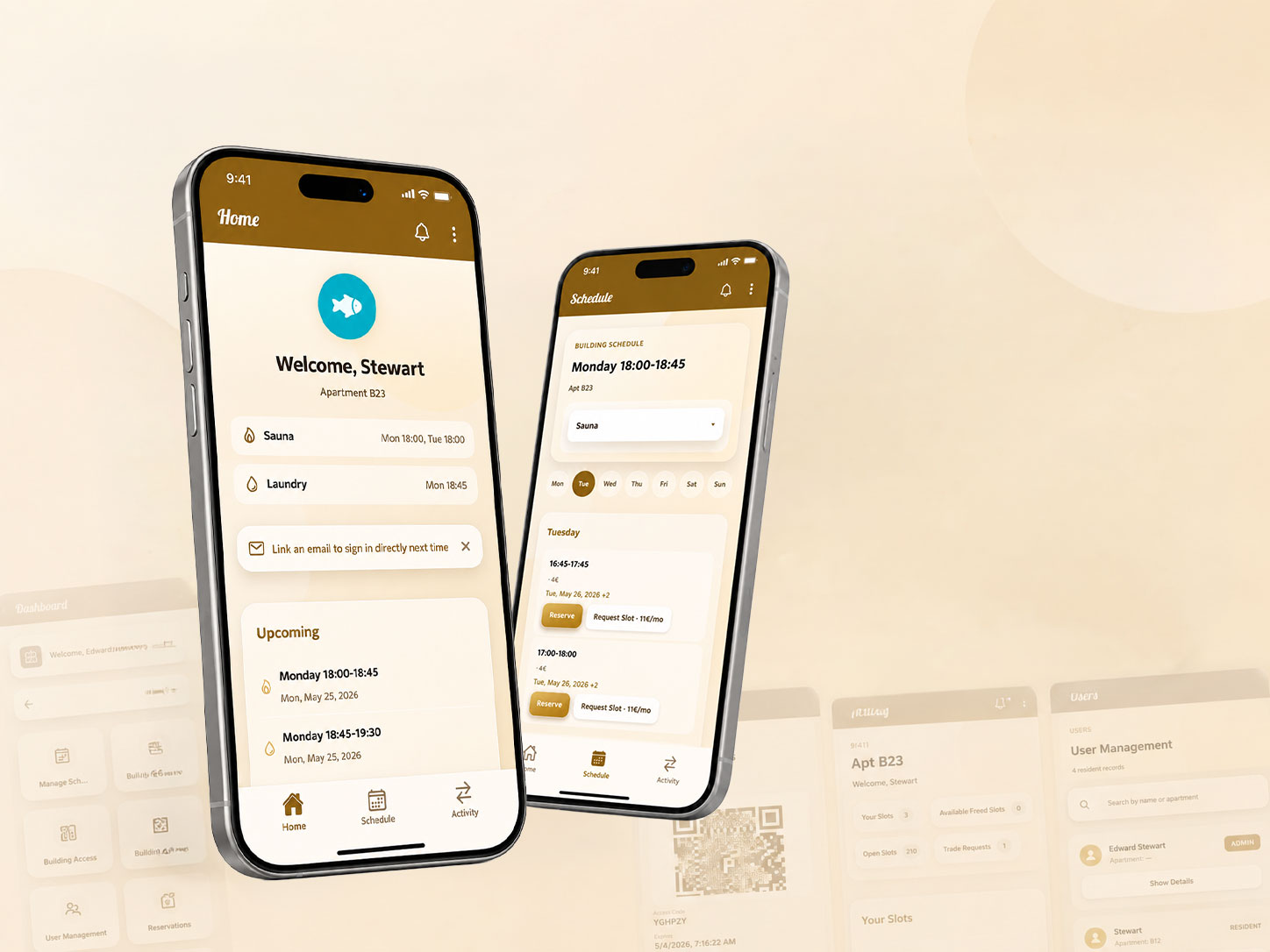
Sauna Scheduler
SaunaScheduler is a mobile-first booking and slot management app for shared residential facilities such as saunas and laundry rooms. The product helps residents manage recurring slots, reserve open times, request trades and receive notifications, while also giving building admins tools for schedules, users, access codes and reservations. I designed and built the product as a full-stack React Native prototype, combining mobile UI design, Firebase data modelling and complex scheduling logic into a clear resident-facing experience.
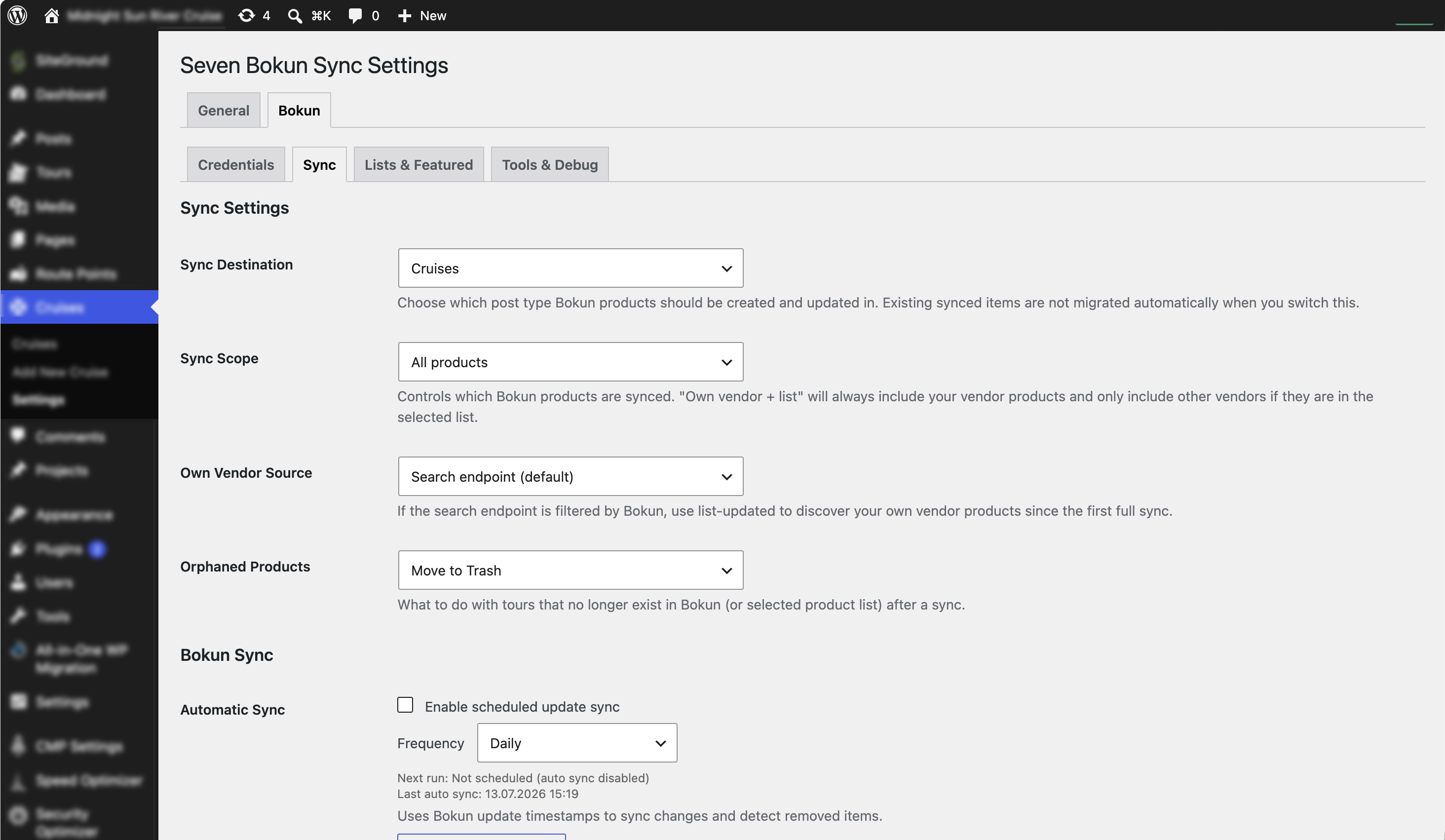
Bokun Sync Platform
The Bokun Sync Platform is an integration system developed for tourism businesses to automatically synchronize products from the Bokun reservation platform into WordPress. Instead of manually recreating booking content on websites, the system imports product data, media, and structured information into searchable WordPress content, allowing businesses to maintain a single source of truth while improving SEO and content management. Context & Challenge Tourism operators often manage bookings through Bokun while maintaining their marketing website separately. This creates several challenges: duplicated content management inconsistent product information poor search engine visibility time-consuming manual updates disconnected editorial workflows The objective was creating an automated synchronization process that reduced maintenance while preserving the flexibility of WordPress. HeadingSolution The platform synchronizes Bokun products into custom WordPress content structures through automated data processing. The system includes: automatic product synchronization custom post type generation taxonomy synchronization media importing booking widget integration SEO-friendly product pages multilingual compatibility flexible content customization Rather than exposing Bokun directly as the public website, the integration allows businesses to build richer user experiences while keeping booking information synchronized. My Role I was responsible for: solution architecture API integration WordPress plugin development data modeling synchronization logic frontend implementation client customization deployment maintenance and iteration Technical Approach The platform was designed around synchronization rather than duplication. Product information is retrieved from Bokun, transformed into structured WordPress content, and enriched with additional editorial material without losing synchronization with the booking system. This allows marketing teams to optimize content independently while operational booking data remains centrally managed. Outcome The platform has been deployed across multiple tourism websites, enabling automated synchronization between Bokun and WordPress while improving editorial flexibility and search engine visibility. The project demonstrates experience in API design, systems thinking, full-stack development, and translating business requirements into scalable software solutions. Key Learnings Business automation often creates more value than adding features. Automating repetitive publishing tasks significantly reduced manual work while improving content consistency. Good integrations balance flexibility with reliability. The synchronization workflow was designed to accommodate different client websites without requiring changes to the underlying booking platform. Modern APIs enable content ecosystems rather than isolated systems. The project reinforced my interest in designing products that connect existing services into seamless user experiences.

Design Projects
Logos, branding, and visual design projects



Skills & Technologies
Technologies I work with to build modern, scalable applications
Design
Development
Design Tools
AI
CV
Curriculum Vitae
Edward Stewart is a web developer and a graphic designer who combines creative and technical thinking, focusing on digital services, integrations, and solutions that utilize Artificial Intelligence. He has vast experience in React, Next.js, and TypeScript development, as well as API and system integrations. Edward built MCP-based AI agent workflows where LLM models control the 3D environment (Blender Python API). Curious, analytical, and experimental in his approach, he utilizes AI-assisted work ("vibe coding") from ideation to prototyping and validation.